Beyond Medicine: Dr. Daryl Joel Dumdum’s IRCAD Journey into Robotics, Innovation, and Award-Winning Medical Technology
Beyond Medicine: Dr. Daryl Joel Dumdum’s IRCAD Journey into Robotics, Innovation, and Award-Winning Medical Technology
For Dr. Daryl Joel Dumdum, MD, DFM, FSRM, the future of medicine is not defined by medicine alone.
It is being shaped at the intersection of clinical experience, engineering, robotics, artificial intelligence, entrepreneurship, and human creativity.
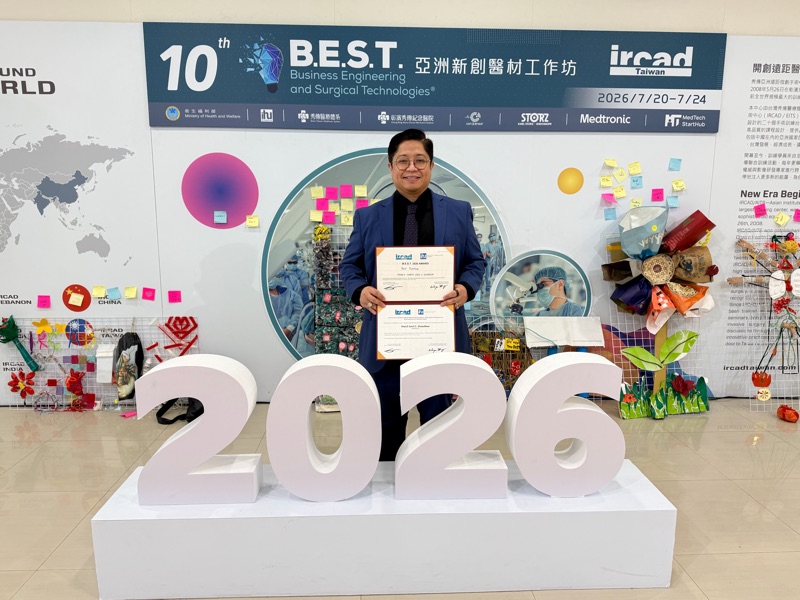
This perspective took on new meaning during Dr. Dumdum’s experience at IRCAD, an internationally recognized center for research and training in minimally invasive surgery and medical technology. What began as an opportunity to learn about advanced surgical technologies became an immersive experience in innovation — culminating in his team receiving recognition for the Best Prototype.
Entering the World of Medical Robotics
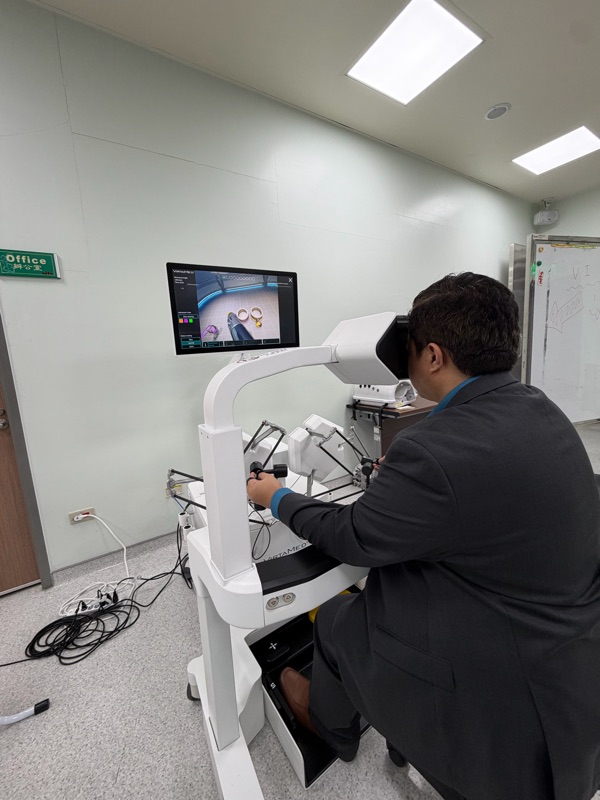
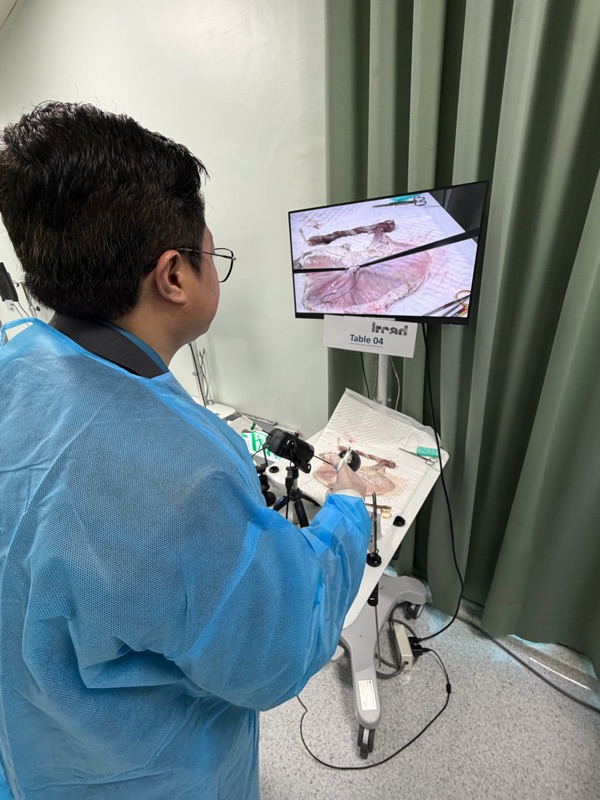
One of the most valuable aspects of the IRCAD experience was exposure to the rapidly evolving field of robotic and technology-assisted surgery.
For a physician accustomed to looking at healthcare primarily through the clinical lens, seeing how engineers, surgeons, programmers, and innovators approach medical problems offered a different perspective.
Robotics is no longer simply about machines performing surgical movements. Modern surgical innovation involves the integration of imaging, sensors, software, precision engineering, human-machine interfaces, and increasingly, artificial intelligence.
The experience reinforced an important realization for Dr. Dumdum:
The physician of the future must understand not only disease, but also the technologies that will redefine how disease is diagnosed, treated, and prevented.
Learning to Think Like an Innovator
Perhaps one of the most transformative lessons from IRCAD was not a particular technology or device.
It was a way of thinking.
Instead of beginning with a product, innovators begin with a clinical problem.
What is the unmet need?
Who is affected?
Why do current solutions fail?
And most importantly:
Can we create something better?
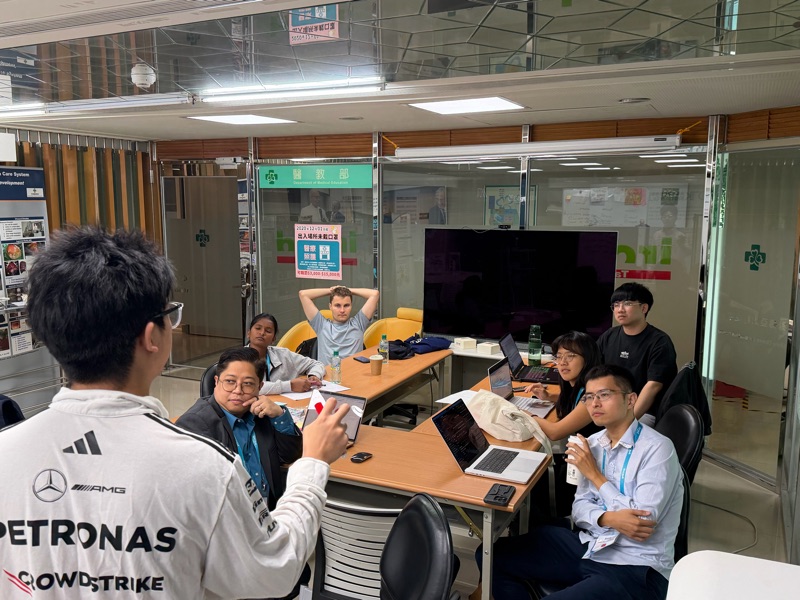
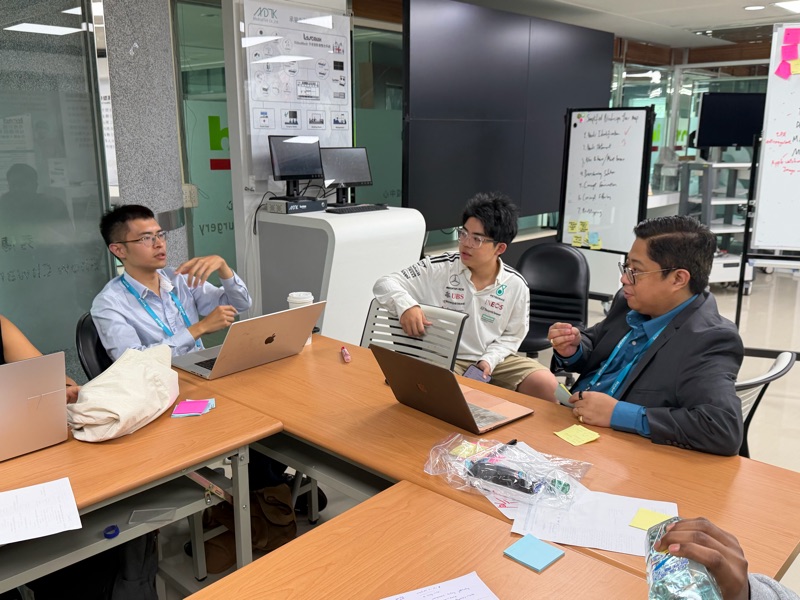
This needs-driven approach challenged participants to move beyond conventional thinking. Clinical problems were analyzed, needs statements were developed, ideas were generated, concepts were filtered, and promising solutions were transformed into prototypes.
For Dr. Dumdum, it was an important bridge between being a physician and becoming a physician-innovator.
From a Clinical Problem to a Prototype
The innovation challenge eventually led Dr. Dumdum and his multidisciplinary team to focus on an important cardiovascular problem: stroke prevention in patients with atrial fibrillation.
Current left atrial appendage occlusion technologies have transformed stroke prevention, but important challenges remain, including device-related thrombosis and peri-device leaks.
The team asked a different question:
Instead of simply closing the left atrial appendage, could we design a system that helps prevent blood from becoming stagnant and forming a clot in the first place?
From that question emerged an innovative device concept based on maintaining blood movement within the left atrial appendage.
The proposed system incorporated concepts involving a responsive mesh or implant, controlled movement, flow sensing, and wireless energy — combining medicine with engineering, physics, and digital technology.
It was ambitious.
But innovation often begins with an idea that initially appears difficult.
An International Team, One Mission
Another defining element of the IRCAD experience was collaboration.
The team brought together individuals with backgrounds in medicine, bioengineering, software, science, and finance, with members coming from different countries including the Philippines, Taiwan, India, Australia, and France.
Each person saw the problem differently.
The physician understood the disease.
The engineer questioned whether the mechanism could work.
The software specialist considered how the system could respond intelligently.
The business perspective asked whether the innovation could eventually become commercially viable.
Those different perspectives ultimately became the team’s strength.
It demonstrated one of the most important principles of modern medical innovation:
The next breakthrough in healthcare may not come from a doctor working alone. It may come from doctors, engineers, scientists, programmers, and entrepreneurs working together.
Winning Best Prototype
After an intense process of problem identification, brainstorming, concept development, prototyping, and presentation, the team’s work was recognized with the Best Prototype award.
For Dr. Dumdum, the recognition represented something more meaningful than winning a competition.
It validated the power of multidisciplinary thinking.
A group of professionals from different backgrounds had started with a clinical problem and, within a limited period, transformed an idea into a tangible prototype worthy of recognition.
That experience created another important realization:
Physicians do not have to remain only users of medical technology. They can help create it.
Bringing the IRCAD Mindset Back to the Philippines
The lessons from IRCAD did not end when the program concluded.
Dr. Dumdum has since incorporated the same problem-solving philosophy into his leadership and organizations in the Philippines.
Teams are encouraged to identify problems, develop clear needs statements, brainstorm without immediately limiting possibilities, evaluate solutions objectively, and rapidly transform the strongest concepts into prototypes.
This approach has become particularly relevant in the development of SH360 Medical Corporation and its growing ecosystem involving regenerative medicine, research, education, healthcare innovation, and entrepreneurship.
The goal is to cultivate a culture where healthcare professionals are not afraid to ask:
“Why are we doing it this way — and can we build something better?”
From Regenerative Medicine to MedTech Innovation
Dr. Dumdum’s work in regenerative medicine already places him within a rapidly evolving area of healthcare.
But the IRCAD experience broadened that perspective further.
The future may not belong to one technology alone.
Stem cells, regenerative medicine, robotics, artificial intelligence, precision diagnostics, biotechnology, sensors, and medical devices are increasingly converging.
The physicians who understand how these disciplines interact may play an important role in defining the next generation of healthcare.
More Than an Award
Winning Best Prototype was a proud moment.
But the greater reward was the transformation in thinking.
IRCAD demonstrated that innovation can be learned, structured, tested, challenged, and improved.
It showed that physicians can move beyond asking:
“What treatment can I give?”
and begin asking:
“What solution can we create?”
For Dr. Daryl Joel Dumdum, MD, DFM, FSRM, that distinction represents an important part of becoming the modern physician leader — one who treats patients today while helping build the medicine of tomorrow.
From the clinic, to regenerative medicine, to robotics and medical innovation — the journey continues.


Comments
Post a Comment